Biography
Donald Gardner, poet, performer and literary translator
Donald Gardner, poet, performer and literary translator, was born in London in 1938. He studied Modern History at Merton College, Oxford, graduating in 1960. He won the Rome Prize in Medieval and Renaissance History, studying at the British School at Rome and receiving a B.Litt. Oxon. for his dissertation on ‘Politics and Propaganda under Giovanni II Bentivoglio’, studying mainly in Bologna and Rome from 1960 to 1963.
It was in Italy that he began writing poetry and this soon became a major preoccupation. He was encouraged in this by Samuel Beckett, whom he visited in Paris, with an introduction from a cousin who knew his mother. Beckett was hospitable and, after an afternoon sharing a bottle of wine and conversation, he suggested dropping in on the editors of the Paris Review. Gardner did so and the deal was sealed, his first publication.
After a year in London, which he spent largely in the British Museum reading room and the Poetry Library of the American Cultural Centre, and meeting poets of that decade – George Barker, John Heath-Stubbs and Dom Moraes, Donald Gardner moved to New York (1964-1967), where he worked as a lecturer in English Literature at Pace College (now university). During these years, he also travelled extensively in New Mexico, Mexico and Nicaragua. His first public reading was at the Poetry Project, New York, in 1965 and in 1967, he took the stage at the East Village Theatre, in the company of Ginsberg, Gregory Corso and others for an audience of 2000. Much more than in the UK, public readings of poetry were taken seriously in New York, and Gardner quickly identified with this trend.
It was also in New York that he began to publish his poems in the literary magazines of that time.
On his return to London in 1967, Donald Gardner’s first collection of poetry, ‘Peace Feelers’, was published by Café Books, in a series curated by Christopher Logue. A second collection, ‘For the Flames’ was published in 1974 by Stuart Montgomery’s Fulcrum Press. He also founded Guerilla Poets, a group of poets that held a workshop in the London Arts Lab in Drury Lane and organized street readings on Saturdays in various London neighbourhoods.
From 1970 to 1974, inspired by Julian Beck and Judith Malina, Gardner was an actor and co-director of the London Living Theatre, a street theatre group that performed in London, Leeds and Belfast. In 1979 he moved to the Netherlands, and settled in Amsterdam in 1983. Since 2001 however, he has spent part of every year in co. Kildare, Ireland.
Gardner has always been interested in poetry in performance and in the early years in the Netherlands he made a number of performance pieces, based on his own poetry. The most notable of these was ‘Chicken with Madness’, a dance-performance, directed by the Italian choreographer, Patrizia Filia, that had its premiere in Amsterdam in 1987 and which he performed many times in London, the Netherlands and in New York. In 1997 he also presented a performance poetry cycle at the Pink Pony cafe during the First New York Fringe Festival.
Donald Gardner has published a number of collections of poetry, including ‘How to Get the Most out of your Jet Lag’ (Ye Olde Font Shoppe, New Haven, Ct., 2001), the Glittering Sea (Hearing Eye, London, 2006), The Wolf Inside (Hearing Eye, 2014) and Early Morning (Grey Suit Editions, London, 2017). His New and Selected Poems (1966-2020), appeared with Grey Suit Editions in 2021.
Gardner has also been a translator of poetry, almost since he embarked on his career as a poet. In the 1960s he published translations of work by Cesare Pavese and Pier Paolo Pasolini (The London Magazine and Chelsea Magazine). He went on to become a translator of Latin American writers: ‘The Sun Stone’ by Octavio Paz (Cosmos Books, York, 1969) and ‘Zero Hour’ by Ernesto Cardenal (el corno emplumado, no. 28). He is the translator, in collaboration with Suzanne Jill Levine and the author, of ‘Three Trapped Tigers’ by the Cuban novelist, Guillermo Cabrera Infante (Harper & Row 1971). (Of this book, Salman Rushdie wrote: ‘I don’t know why any human beings should wish to attempt a task as difficult as this – perhaps because it was there.’). A translator of many Dutch and Flemish poets, he won the Vondel Prize in 2015 for his book of translations of Remco Campert, ‘In those Days’ (Shoestring Press). Recently he published a collection of Maria Barnas’s poetry, ‘Night Boat and other Poems’ (Shearsman Books, 2025). His collection of translations of Stefan Hertmans’ poetry, ‘Goya as Dog’, was published in August 2026, also with Shearsman.
Donald Gardner is married to Selese Roche, who is also a widely published poet. From a previous relationship, he has a daughter, Eileen Jeffares, who is married to Tony de Bok and they have three children: Brigit, Erinn and Aidan.
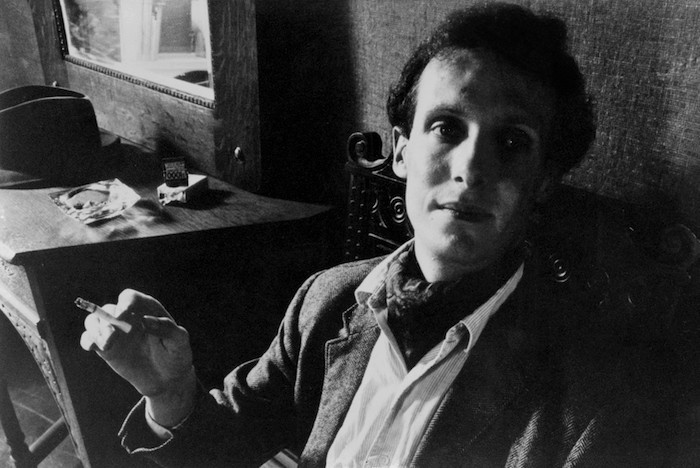
Photo by Seymour Linden, New York 1967
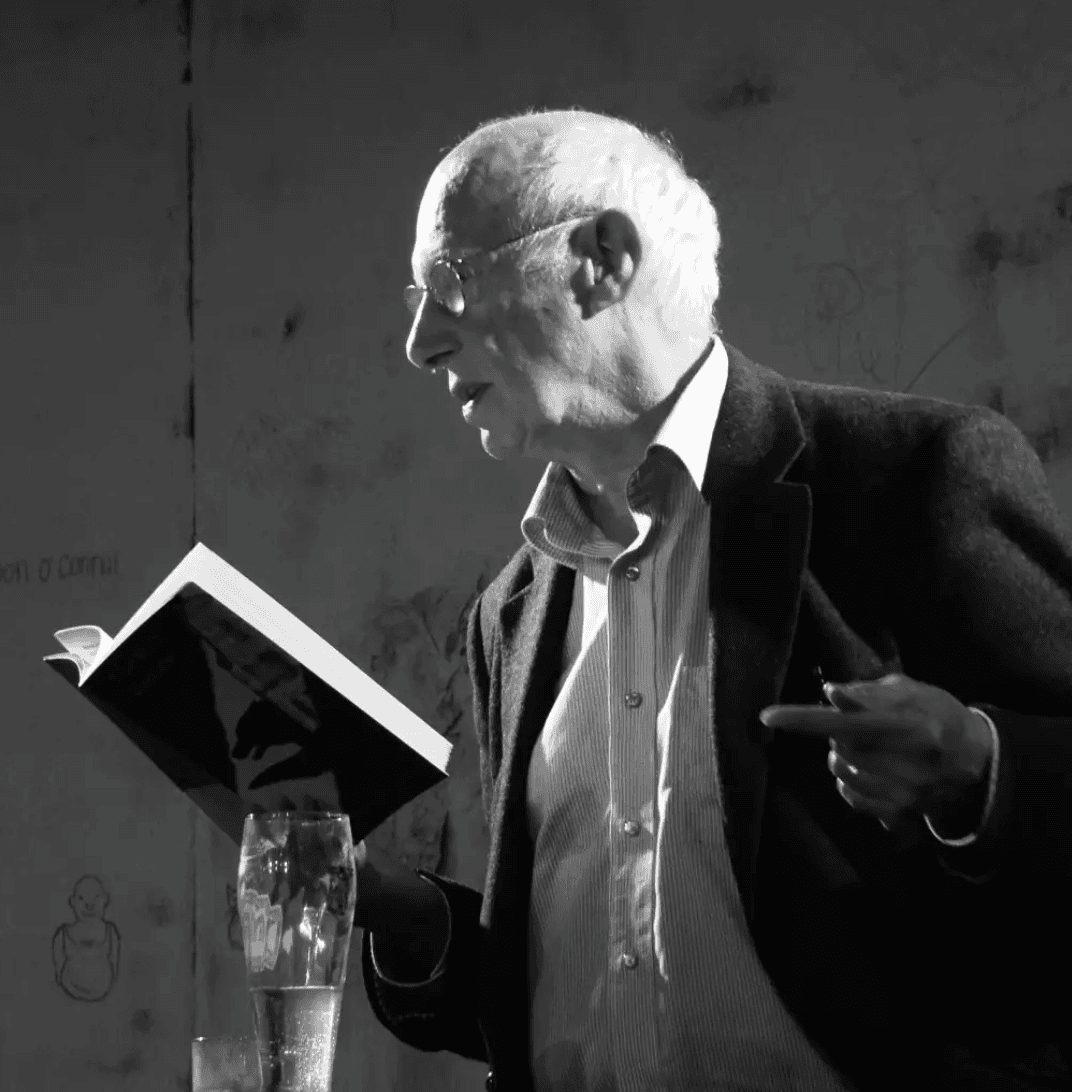
Photo by Amina Marix Evans, 2014
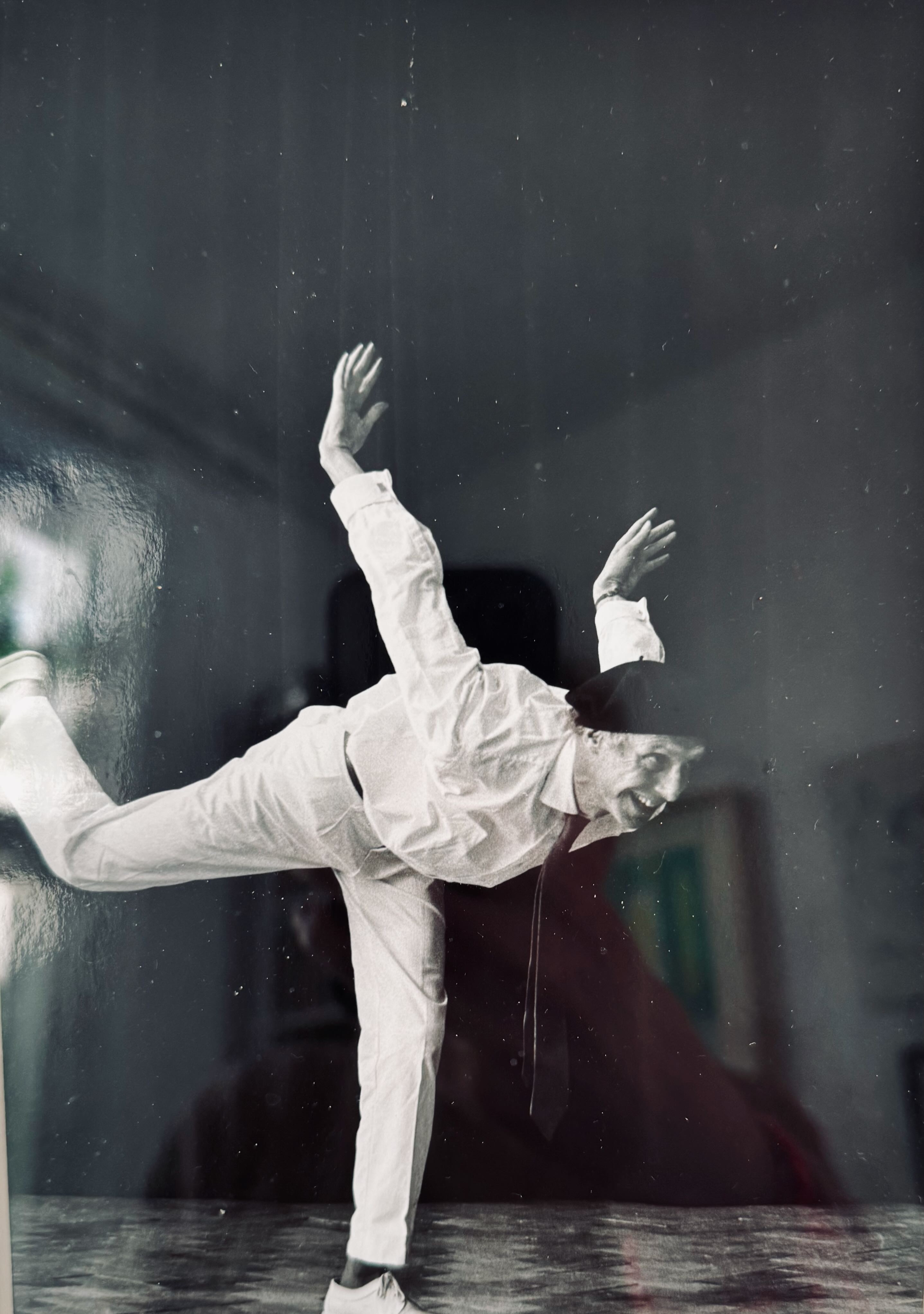
Photo, Chicken with Madness, Madeleen Ladee, 1987
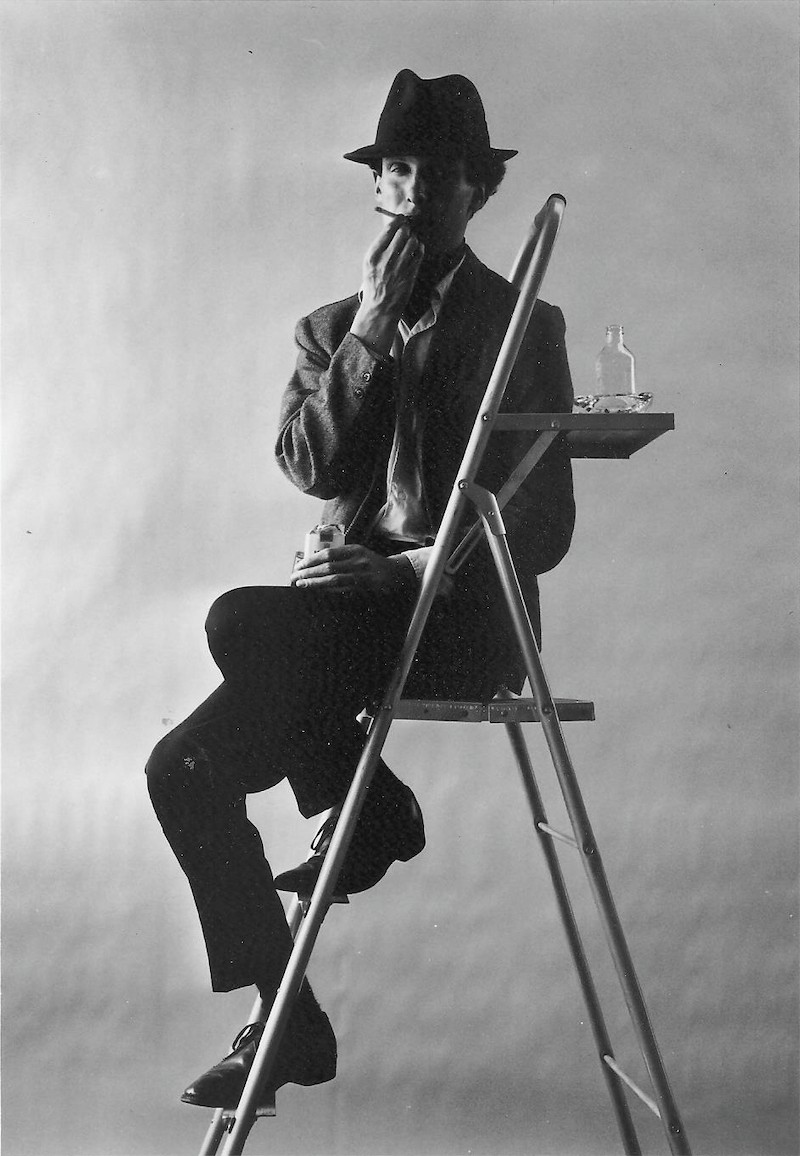
Photo by Seymour Linden, New York 1967
Short quotes from reviews of Donald Gardner’s collections of poetry.
‘The title poem of this collection … is one of the best poems which has been written about 9/11. Again, this is a poem which works movingly as a written poem as well as dramatically when read by Gardner.’ Martin Bax, Ambit magazine. On ‘The Glittering Sea’.
‘Climb aboard any of Donald Gardner’s wryly inventive poems and be prepared for a bountiful ride – goodwill and sharp humour, sweetness and melancholy inseparable travelling companions. But beware of the wolf: “I am a wolf / and the fear of a wolf … while I write I know I live.” While we read Gardner, we know we live.’ Jane Draycott, on ‘The Wolf Inside’.
‘Gardner’s verse remains free. The form follows the cadences of a speaking voice, but actually it deftly espouses a tightness which is pretty economical. Every word counts, but Gardner camouflages his thriftiness in dry wit and, when you hear him read, he captivates you immediately, for the poems are perfectly accessible and delivered with a stentorian intonation that reminds me of recordings by Ezra Pound.’ Anthony Howell, The Fortnightly Review. On ‘The Wolf Inside’.
‘Every poem has been meticulously honed to pull its weight. Not only that, but every poem speaks eloquently and lucidly to its neighbours as well as to the reader... ’ Richie McCaffery, London Grip, on ‘Early Morning’ (Grey Suit editions, 2017).
‘Donald Gardner is a poet of some range: of location, of preoccupation, and of formal means. The poet we encounter here is a thoughtful man with a quirky and mischievous sense of humour.’ Derek Coyle, ‘The High Window’. On ‘New and Selected Poems (1966-2020)’.
‘As a poet he has a quiet, settled command of his craft, his work incessantly readable and comprehensible.’ Fred Johnston, on New and Selected Poems (1966-2020), London Grip
[Donald Gardner is ] ‘... disenchanted (but never cynical); mordant; long-suffering; uncomplaining; an outsider. He belongs in a world of garbage rounds, missed trains, forgotten sandwiches, fierce-lit office blocks, motor cycles… A Woodbine world.’ Desmond Egan, The Fortnightly Review, on New and Selected Poems (1966-2020).
The Winchester-based poet Stephen Boyce wrote the following description of Gardner’s as a performance poet on seeing him read at an event in Portsmouth (2014):
‘A Donald Gardner performance is a joy to behold, or to experience. Undoubtedly, he is a performance poet', though not perhaps in the modern understanding of the term. The first thing that strikes you is the volume and the vocal control. This is a man used to reading to large audiences or performing without a microphone. His body and his voice are his instrument – the hands and arms conjuring new and surprising vocal inflections, summoning the words off the page and into the air. His mouth twists and stretches and gapes to shape the sounds. He smiles, surprises himself with the often deadpan humour that undercuts his stentorian declamations.’
Common Questions
Can I book you to come and read?
Yes, you can please go to the Contact page and let me know, we'll be in touch shortly.
Do you still do any kind of perfomances, besides reading?
Depends on the concept. Please let me know what you have in mind and contact me via the Contact page.